Engagement
Hold the students who have outgrown screens
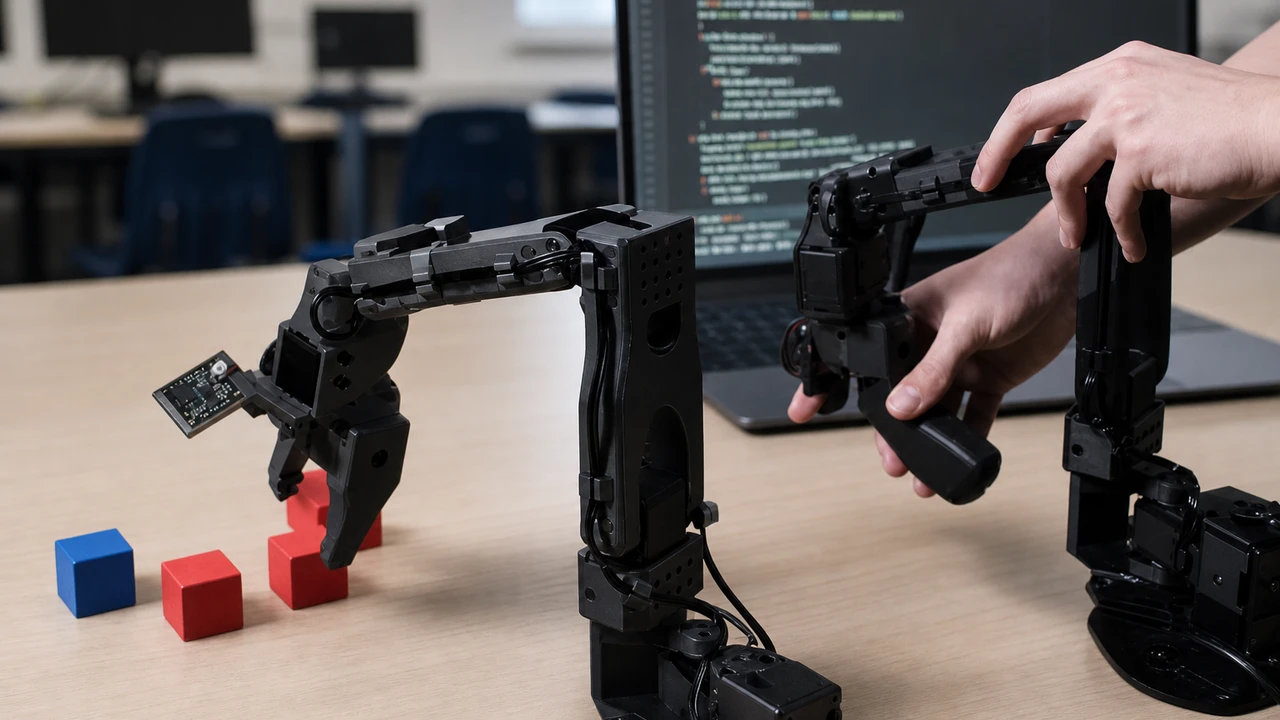
Upper-primary and secondary students who are done with floor-bots and block coding stay engaged when the robot is real, physical, and theirs to command.
Robonine Labs · For schools
A 5-DOF robot arm, a 10-lesson interactive course and the Robonine Lab platform. Students assemble, calibrate and program an actual robot — running the same open-source stack (HuggingFace LeRobot) that university robotics labs use, at a school budget.
Why schools say yes
Engagement
Upper-primary and secondary students who are done with floor-bots and block coding stay engaged when the robot is real, physical, and theirs to command.
Prestige & enrolment
A visible robotics programme becomes open-day material, prospectus copy, and a reason families choose your school over the one down the road.
The lesson experience
Every lesson ends with the robot doing something on the desk — never just a slide on a screen.
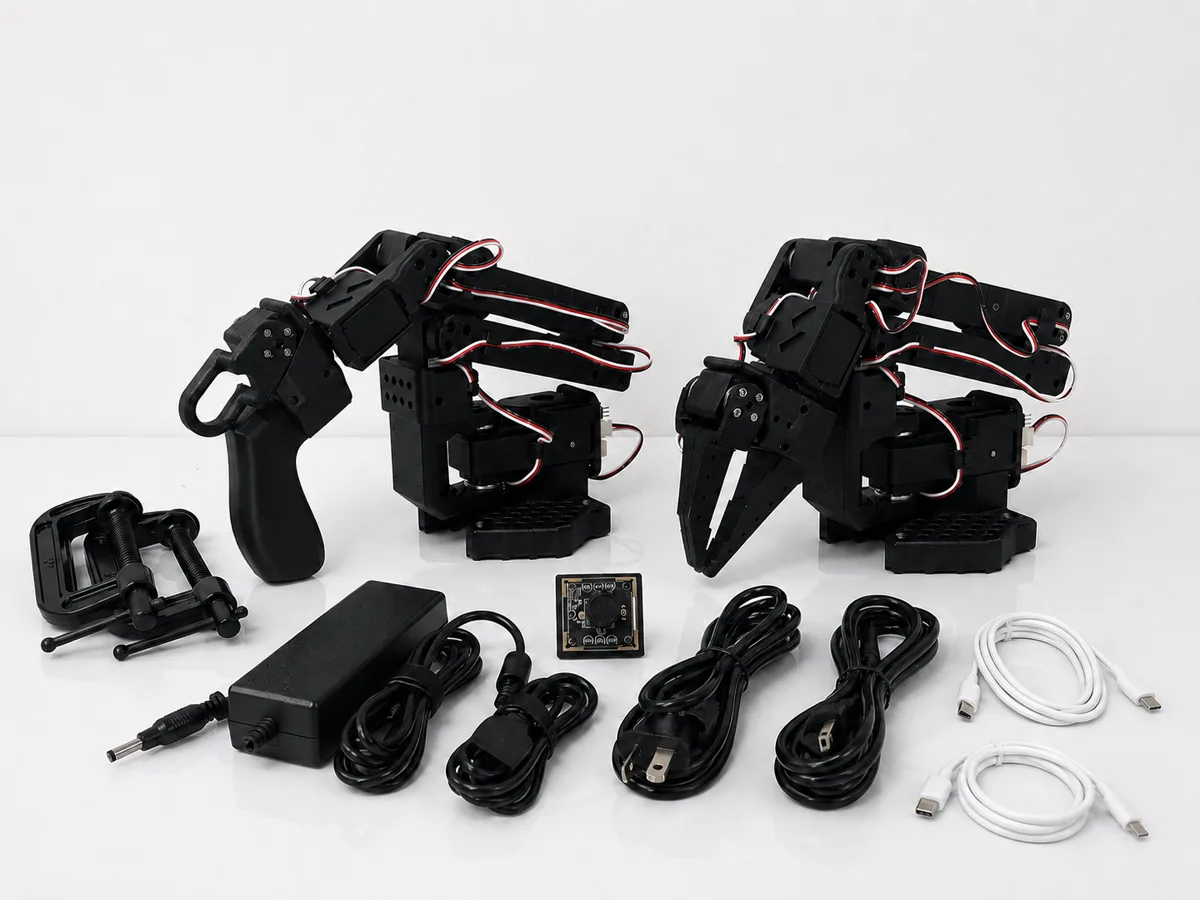
Build a real 5-DOF arm from the parts in the box.
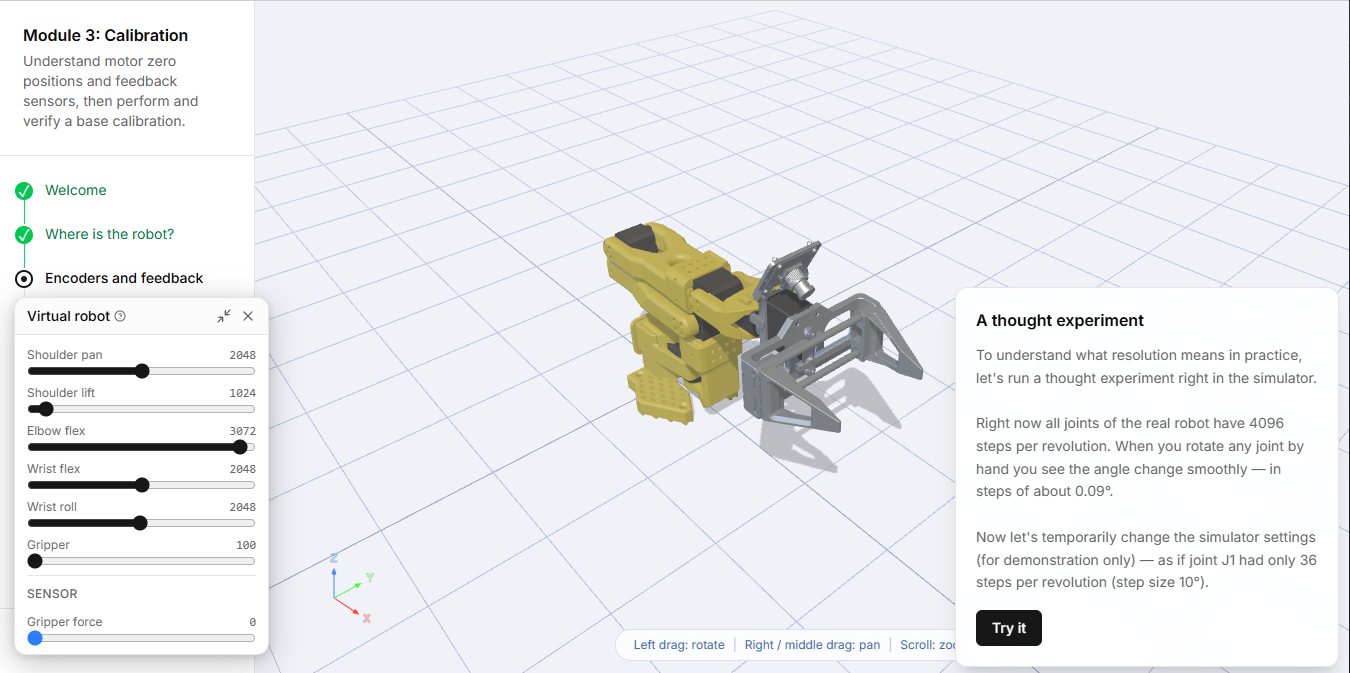
Zero the joints; learn accuracy vs. repeatability.
Move the leader arm by hand; the follower mirrors it.
Write Python for pick-and-place and tool work.
Add the camera; the robot sees, decides and acts.

Not another toy kit
The same open-source stack used in university robotics labs. Students learn the real tool, not a toy abstraction.
Open parts, open firmware, open datasets. Nothing is a black box — students can read, change and extend everything.
Teleoperation → learning from demonstrations → ML: the exact progression robotics teams follow, with no re-tooling later.
Where it leads
Named roles and the companies that hire for them — not abstract “STEM careers”.
Assembling, calibrating and programming a real robot arm.
Teleoperation and imitation learning with LeRobot.
Perception for pick-and-place and autonomous tasks.
The offer
SO-ARM101 kits — a real 5-DOF arm with a parallel gripper and camera. Start with one, one per pair, or a full class.
Ten interactive lessons, adapted to your curriculum and the age of the class, delivered on the Robonine Lab platform.
We source and vet a teacher for you to hire, or train your existing teacher to run the course. On request.
No in-house roboticist needed. The course is self-guided — the teacher supervises, no robotics expertise required.
How it works
Honest timeline — delivery is 2–4 weeks, so plan the start 4–6 weeks ahead.
A 30-minute call to size the pilot to your class and goals.
50/50 deposit; delivery in 2–4 weeks.
We adapt the 10 lessons and set up your class on the platform.
We source a teacher for you to hire, or train yours.
Students assemble and run the robot; certificate at the end.
Start small
No big upfront commitment. Start with a single kit or one classroom — the cost grows only as you do.
Straight answers
The course is self-guided. We also source and vet a teacher for you to hire, or train your existing teacher to run it.
Desk-scale hardware, low-torque servos, a force-sensing gripper and a software E-stop. The very first, introductory lesson of the interactive course is a safety briefing — work-zone rules and safe handling — and the class covers it before the robot moves.
It is, and we say so. Plan the start 4–6 weeks ahead and you are comfortably clear.
Those are great for first contact. This is the next step up — the same workflow, vocabulary and open-source tools the robotics industry actually uses, not a replacement for that first kit.
Why it’s credible
The SO-ARM is part of the open LeRobot ecosystem — the stack robotics researchers and startups actually use.
Open hardware, open firmware, open datasets — inspectable end to end. Students can read it, change it, and publish their own work.
The same teleoperation → learning-from-demonstrations → ML path taught in university robotics labs.
Pilot-school references will be listed here as they come online.
Who it fits
Book a call
Tell us about your class and we’ll come back with a plan and an exact quote — no commitment.
Prefer email? hello@robonine.com
We value your privacy
We use cookies to enhance your browsing experience, serve personalised ads or content, and analyse our traffic. You can accept all, reject non-essential ones, or choose which cookies to allow. Privacy Policy
Manage cookie preferences
Required for the site to function and cannot be switched off.
Help us understand how visitors use the site.
Used to deliver relevant ads and measure their performance.
Enable enhanced functionality and personalisation.